DHAKA: Bangladesh plans to expand its liquefied natural gas (LNG) import infrastructure with two new terminals by 2030 to meet growing demand for the fuel, a senior government official said.
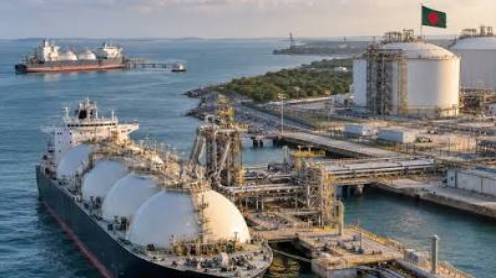
Thank you for reading this post, don't forget to subscribe!State Minister for Power, Energy and Mineral Resources Anindya Islam Amit said Bangladesh plans to commission a new floating storage and regasification unit (FSRU) by 2028 and develop a land-based LNG import terminal at Matarbari by 2030.
The new FSRU, planned for Moheshkhali Island in Cox’s Bazar, will have a regasification capacity of around 600 million cubic feet per day (mmcfd). The proposed Matarbari land-based terminal will have a capacity of approximately 1,000 mmcfd.
Bangladesh currently operates two floating LNG terminals with a combined regasification capacity of around 1,100 mmcfd.
According to Amit, the expansion is being planned in anticipation of a significant increase in LNG demand over the coming decades. Bangladesh is expected to require an additional 3–4 million tonnes per annum (mtpa) of LNG between 2026 and 2030, while the additional requirement could rise sharply to 17–18 mtpa between 2031 and 2040.
Bangladesh imported nearly 7 million tonnes of LNG last year, with Qatar accounting for a major share of its supplies.
However, disruptions to LNG shipments following the geopolitical conflict involving Iran and the United States have forced Bangladesh to rely more heavily on spot-market purchases. QatarEnergy also reduced its scheduled LNG deliveries to Bangladesh for the year after damage to its LNG facilities.
Bangladesh’s state-owned energy company Petrobangla has been exploring alternative sources of LNG, including additional spot-market purchases and government-to-government agreements with other suppliers.
The country has also turned to coal-fired generation at times of elevated LNG prices. Earlier this year, as Asian spot LNG prices surged to three-year highs, Bangladesh increased coal-based power generation and electricity imports from coal-fired sources.
The planned LNG terminals are expected to strengthen Bangladesh’s energy security and provide additional regasification capacity as demand for natural gas continues to grow.
By Reuters